Blog · · By Rickard Eriksson
AI doesn’t give superpowers to everyone. Just to those who know how
AI isn’t a replacement, it’s a multiplier: it amplifies what you already know. That creates a new gap in workplaces, and it’s growing every month. But the gap isn’t a law of nature.
About 12,000 years ago, humanity faced a technological shift. Some people started farming, built up stores, and settled in villages. Others scoffed and kept hunting mammoths. We know how it turned out: those who learned the new way built civilisations, and, by the way, the mammoths died out.
The point of that story isn’t that technology won in the end, though it always does. The point is that the shift didn’t lift everyone at once. It lifted those who learned first, and it took a few thousand years for the rest to catch up. This time, we don’t have thousands of years. Barely a few.
A multiplier, not a replacement
The most important thing to understand about AI in working life fits in one sentence: AI isn’t a replacement, it’s a multiplier. It amplifies what you already know.
An experienced lawyer who knows exactly what to look for in a contract can let the AI do a week’s reading in an afternoon, because she spots a wrong answer straight away. A marketer who knows their craft gets ten useful ideas instead of one. But if you multiply zero, you get zero, just faster and with more confidence. If you treat AI like an oracle and ask vague questions, you get elegantly worded mediocrity back, and you’ll often draw the wrong conclusions from it too, because it sounds so convincing.
On top of that, this shift is back to front compared to all the others. It’s not manual jobs that are affected first, it’s office work, the very groups that usually watch technological shifts from the sidelines.
The gap that grows every month
The result is already visible in workplaces: a widening gap between those who know how to use AI and those who just play with it. Two colleagues with the same job title and the same salary deliver at completely different levels, and the difference isn’t talent but technical skill.
The usual response from employers is to buy licences and hope. But a licence doesn’t make anyone a farmer, any more than a hoe did 12,000 years ago. The knowledge of how to ask, what the tool can’t do, and when to distrust the answer doesn’t come in the box.
Turning superpowers into a team sport
Training helps, which is why training companies exist. But we built EuroWork with a complementary idea: the best way to close the gap is to build the know-how into the workplace itself, so the floor rises for everyone, not just the ceiling for a few.
Here’s how it works in practice in the service. The sharpest employees’ questioning techniques are saved as templates that everyone can use, instead of each person reinventing their own magic spells. The organisation’s own documents, guidelines, and manuals become the material the AI draws from in everyone’s conversations, so the answers are based on your reality, not the internet in general. Ready-made specialists answer the way the organisation wants, with the right tone and terminology, because the glossary guides every response. And if you feel behind, you can ask the training assistant in the menu absolutely any question, no matter how silly, without any colleagues hearing.
That way, the multiplier becomes a feature of the workplace, not just a few enthusiasts. The gap isn’t a law of nature. It’s the sum of everyone being left to learn on their own.
The question remains
Your employees are already using AI, some of them brilliantly, most of them by trial and error. Do you know who’s who, and do you know what they’re sharing with it?
If you’ve built the know-how into the workplace, you don’t have to guess.
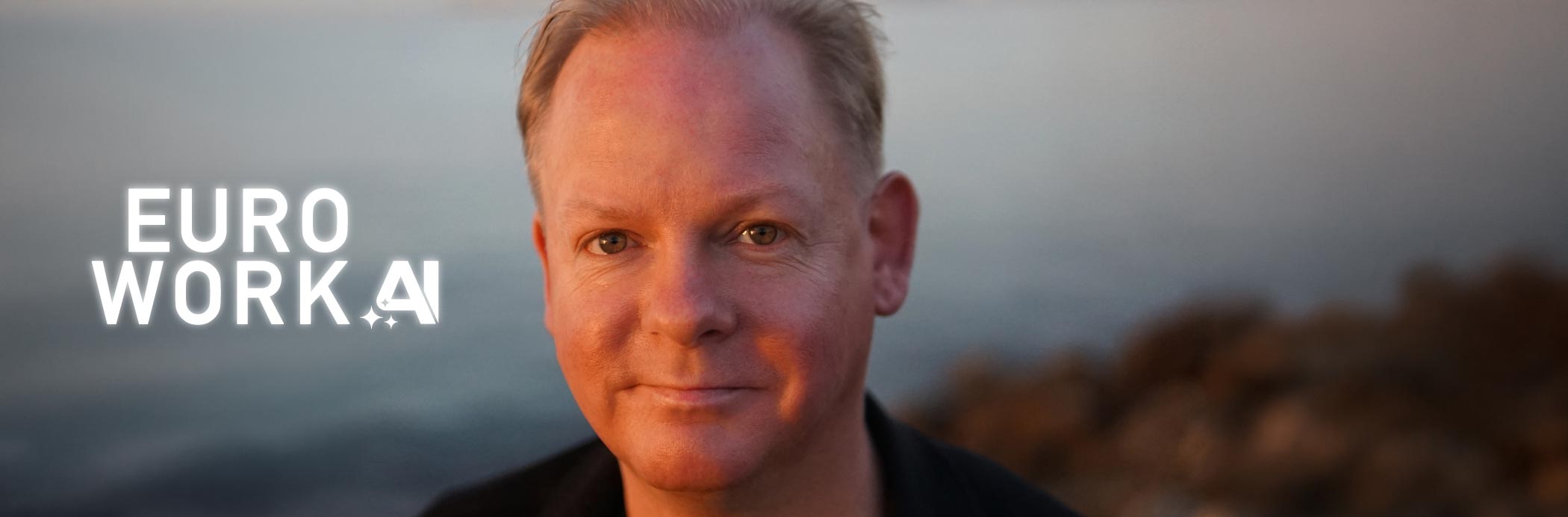
Rickard Eriksson
In 1996 Rickard Eriksson created what became LunarStorm, the world's first social medium, and has since trained people from more than 7,000 companies and public-sector organisations in AI. Today he runs EuroWork.
Read more about Rickard Eriksson →This text has been AI-translated from Swedish into English.
Your employees are already using AI, often in private accounts where no one sees what gets pasted in. EuroWork gives the same AI help in one place where you are in control: sensitive data is caught before it is sent, processing stays in the EU, every answer shows its price and management sets the rules.
See how EuroWork works →